
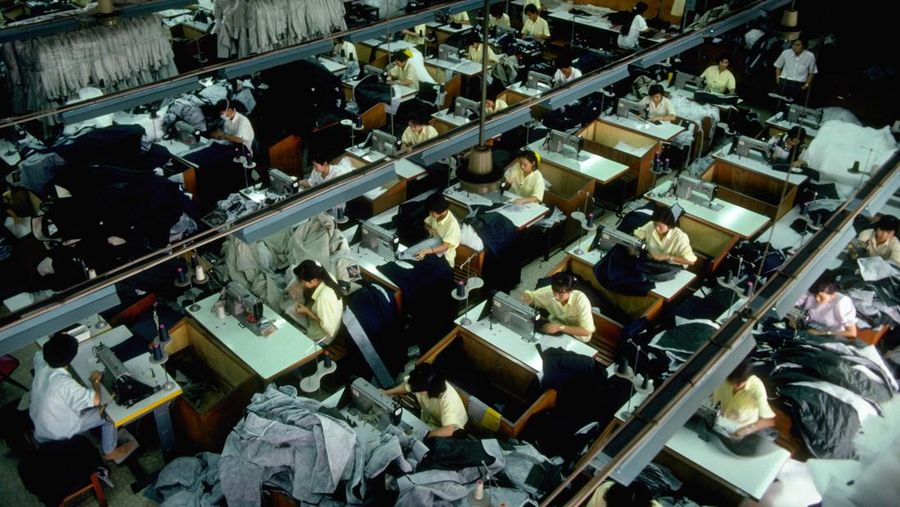
Indonesia's textile and textile product (TPT) industry is projected to maintain growth of around 5% through the end of 2026. However, this growth figure masks a paradox: while new investments continue to flow in, a number of older textile factories remain under pressure, forcing them to halt production.
Redma Gita Wiraswasta, Chairman of the Indonesian Fiber and Filament Yarn Producers Association (APSyFI), stated that the TPT industry's performance in the first and second quarters of 2026 showed continued growth. This trend has made the association optimistic that overall industry growth could reach approximately 5% by year-end.
"Statistically, figures for the first and second quarters of 2026 show growth; we even project that year-end growth could hit around 5%. New investment is the primary driver," said Redma, as cited on Tuesday (August 11, 2026).
Nevertheless, this statistical growth does not fully reflect the actual state of the national TPT industry. The figures fail to account for the loss of production capacity resulting from factory closures, the sale of machinery, and the decommissioning or scrapping of unused production equipment.
According to Redma, this situation is also evident in employment trends. Incoming new investments have not fully offset the workforce losses caused by layoffs resulting from earlier factory closures or production capacity reductions.
"Growth figures don't account for investments lost due to factory closures or the scrapping and sale of machinery. In rough terms regarding the workforce, these new investments haven't been able to match the number of workers previously laid off," he said.
This paradox arises because new investments—particularly foreign direct investment (FDI)—tend to bring in more modern production machinery and technology. Meanwhile, long-established companies face intensifying competitive pressure, particularly from low-priced imports that have flooded the domestic market in recent years.
"This paradoxical situation stems from the entry of new foreign investments (PMA) utilizing modern machinery. Conversely, existing companies have come under pressure, unable to compete with cheap imports over the past five years," Redma stated.
Amidst these conditions, operational activities at most textile and textile product (TPT) companies are reportedly returning to normal. Working hours have generally resumed their usual schedule, although production volumes remain adjusted to each company's capacity to source raw materials.
"Working hours at most companies have normalized, even though production output is adjusted based on the company's ability to purchase raw materials," he noted.
Redma stated that APSyFI is no longer specifically tracking the number of TPT factory closures. While closures are still occurring, the scale is not considered comparable to the wave of shutdowns seen in 2023–2024.
"We are no longer counting factory closures; while there are some, the numbers aren't as high as they were in 2023–2024. After all, even with many closures, the government remains unconcerned and views performance as satisfactory," Redma said.
He believes the phenomenon of established factories facing pressure while new investments enter the market is likely to persist for some time. Financially constrained companies are the most vulnerable to closure, as they must compete with imports domestically while simultaneously facing fierce competition in export markets.
"This paradox will continue, and factory closures will persist—especially for companies with limited financial resources that struggle to compete against imports or have lost export market share to Vietnam and India," he said.
On the other hand, Indonesia remains attractive to new investors. The vast domestic market is a primary reason why new investments continue to flow in. Furthermore, Indonesia's production cost structure is considered sufficiently competitive to support the textile and textile product (TPT) industry in penetrating export markets.
"On the other hand, however, new investments—particularly involving modern machinery and driven by foreign direct investment (FDI)—will continue to flow in, thanks to our massive domestic market and a cost structure that remains competitive enough for the export market," Redma explained.
Although investment prospects remain promising, there are several issues that the government needs to address urgently. Redma identified the licensing process and the competitive landscape of the domestic market as two factors that continue to hinder the development of the TPT industry.
"Two factors that will continue to act as barriers to investment are the licensing process and the government's continued maintenance of a competitive environment that..."