
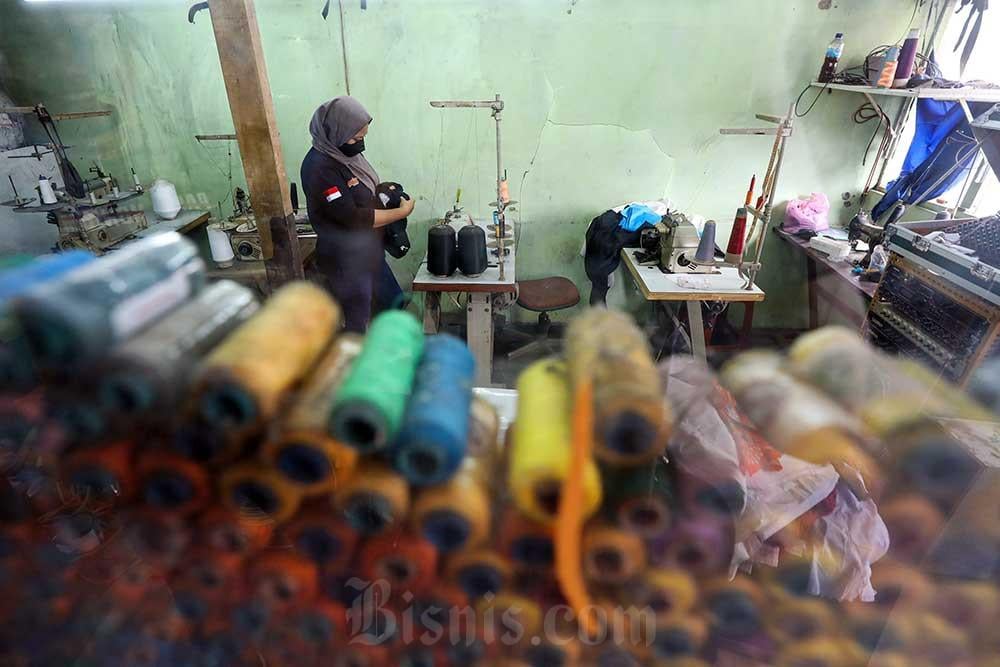
The Indonesian Filament Fiber and Yarn Producers Association (APSyFI) has warned the government to be wary of the declining performance of the national manufacturing sector after the Indonesian manufacturing Purchasing Managers' Index (PMI) fell into the contraction zone in June 2026. This condition is considered a signal that the industry is beginning to face increasing pressure due to weakening purchasing power and rising production costs.
APSyFI Chairperson, Redma Gita Wirawasta, said the decline in the manufacturing PMI to 46.9 reflects the serious challenges facing industry players. He stated that rising prices for raw materials, energy, and interest rates have eroded the competitiveness of the national industry, both in export and domestic markets.
"Forget about competing for exports, even domestically, the government cannot create a conducive competitive climate," Redma said on Thursday (July 2, 2026).
He believes that weak protection for domestic products and the lack of integration of the industrial ecosystem make the manufacturing sector, particularly the textile industry from upstream to downstream, increasingly vulnerable to market fluctuations.
According to Redma, the government's efforts to control the flow of imported products have not yet shown optimal results. If this situation continues without being followed by more decisive policies, the decline in manufacturing activity is expected to deepen.
"This is entering a yellow light turning red if the government still feels everything is fine," he stressed.
S&P Global data shows that Indonesia's Manufacturing PMI fell to 46.9 in June 2026, from 50.0 in May 2026. A reading below 50 indicates manufacturing activity is in a contraction phase after previously being stagnant.
S&P Global stated that this decline reflects weakening operational conditions in the manufacturing sector, influenced by falling demand and slowing production activity.
Meanwhile, Coordinating Minister for Economic Affairs Airlangga Hartarto assessed that the weakening PMI was more influenced by disruptions to the global supply chain that Indonesia is beginning to experience. According to him, the effects of the disruption had actually already hit various countries before finally impacting the national industry.
"It's related to the supply chain. So the supply chain is severely disrupted, and Indonesia is indeed lagging behind. So it's too late to be disrupted," Airlangga said in Jakarta, Wednesday (July 1, 2026).
The government hopes that global supply chain conditions will improve so that national manufacturing activity can recover. However, industry players believe that improving the business climate, strengthening domestic market protection, and increasing industrial competitiveness remain urgent priorities to prevent the manufacturing sector from experiencing a deeper contraction in the coming months.