
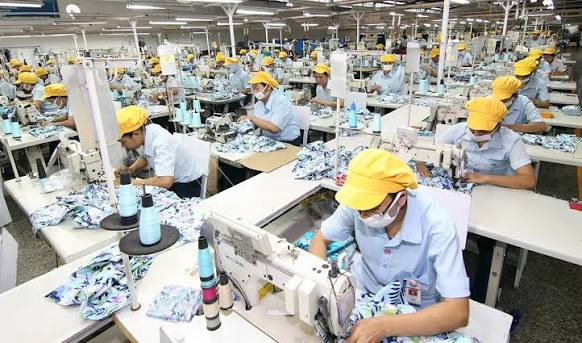
Entrepreneurs in the textile and textile product (TPT) sector are urging President Prabowo Subianto to take decisive action to stem the flood of imported goods—both legal and illegal—which they argue is increasingly threatening the viability of the domestic industry. They contend that policies relaxing import restrictions have intensified market competition, placing small and medium-sized enterprises (SMEs) at a severe disadvantage against ultra-cheap imported products.
Industry players are calling for an immediate shift in trade policy to prevent an acceleration of deindustrialization. Instead, they urge the government to foster reindustrialization by strengthening the national textile industry across the entire supply chain, from upstream to downstream.
Nandi Herdiaman, Chairman of the Association of Apparel Entrepreneurs (IPKB), stated that his organization is currently in discussions with the Ministry of Industry regarding the implementation of safeguard measures—specifically, safeguard duties—on imported finished garments.
According to Nandi, the price competition between local and imported goods is highly unbalanced. He pointed to China, which has had anti-predatory pricing regulations in place since 1999; these rules help maintain fair market competition while protecting workers in the manufacturing and retail sectors.
In contrast, imported garments entering Indonesia are often sold at extremely low prices due to weak oversight of pricing practices. This has left local producers increasingly cornered, making it difficult for them to sustain their operations.
Nandi also called on President Prabowo to purge the cabinet and bureaucracy of officials who continue to uphold pro-import policies. He noted that the upstream and midstream textile sectors have fallen victim to these policies, with hundreds of companies reportedly forced to shut down. Echoing this sentiment, Farhan Aqil Syauqi, Secretary-General of the Indonesian Fiber and Filament Yarn Producers Association (APSyFI), identifies the relaxation of import regulations as a primary factor exacerbating the state of the national textile industry. The consequences extend beyond factory closures to include ongoing layoffs across the fiber, yarn, and fabric production sectors.
He criticizes the government’s long-standing policy of providing various industrial incentives while simultaneously easing import restrictions on raw materials. Furthermore, he notes that the government is now even discussing the possibility of relaxing import regulations for finished apparel.
Farhan argues that such policies threaten to further undermine the integration of the national textile industry. In reality, strengthening the industrial ecosystem—from upstream to downstream—should be the priority to generate added value and enhance the competitiveness of domestic products.
He emphasizes that while imports need not be completely prohibited, their regulation must uphold the principles of fairness, both in terms of pricing and trade procedures. Problems arise when the government is perceived as hindering the implementation of trade remedies—such as anti-dumping measures and safeguards—while simultaneously pushing for more relaxed import policies.
Farhan also highlights that the import quota mechanism, managed through "technical considerations" (*pertimbangan teknis* or *Pertek*), has proven insufficient in shielding the domestic market from dumping practices. Because imported goods are priced so low, consumers naturally compare them against local alternatives.
Consequently, domestic producers are forced to match the prices of imported goods, even when those prices fall below their own production costs. This leaves companies facing the risk of sustained losses, eventually forcing them to cease operations.
According to Farhan, implementing safeguards on finished apparel is essential to prevent the downstream sector from suffering the same fate as the upstream and midstream industries, which have already been severely impacted.
He also questions the overall success of government policies aimed at improving the performance of the textile industry. According to him, the various incentives provided do not yet reflect a genuine recovery, given that the contribution of the textile and textile product (TPT) industry to the gross domestic product (GDP) remains below 1 percent.
Farhan believes that strengthening industrial integration—from upstream to downstream—is a crucial step toward revitalizing the national textile sector. Beyond increasing value-added, such integration has the potential to boost tax revenue, conserve foreign exchange through import substitution, expand exports, and create more job opportunities.
Support for strengthening local products was also voiced by Rudiansyah, Chairman of the Indonesian Textile Consumers Foundation (YKTI). He noted that consumers generally seek products that are both affordable and of good quality. However, a surge in imports—which puts pressure on the domestic industry—could also negatively impact public purchasing power if it leads to further job losses.