
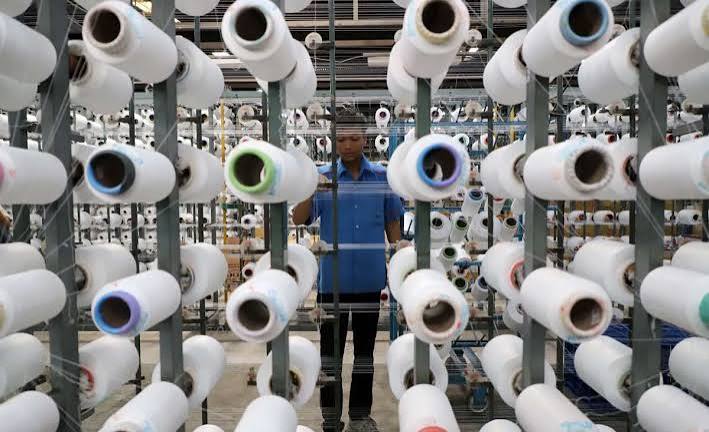
A projected 29.4% increase in the 2027 Provincial Minimum Wage (UMP) in West Java poses a serious challenge to the textile and textile products (TPT) industry. This sharp rise in wages is expected to inflate operational costs for companies—a burden compounded by higher interest rates and the rising cost of raw materials driven by the weakening Indonesian rupiah.
Redma Gita Wirawasta, Chairman of the Indonesian Fiber and Filament Yarn Producers Association (APSyFI), warned that a wage hike approaching 30% could trigger a "cost shock" for the textile sector. Such a scenario threatens a company's ability to sustain operations, particularly for those with limited working capital.
"A 30% increase would create a massive cost shock. Companies would need to secure additional working capital—all while facing higher central bank interest rates and increased raw material costs due to exchange rate fluctuations. Many firms simply won't be able to absorb these costs," Redma stated on Sunday (November 22, 2026).
According to Redma, the convergence of rising labor costs, higher financing expenses, and more expensive raw materials will place an immense strain on the financial health of textile companies. The TPT industry, in particular, requires substantial working capital to maintain a steady supply of raw materials and ensure continuous production.
These cost pressures may force companies to implement efficiency measures, such as workforce reductions. Firms lacking sufficient financial strength might also be compelled to cut back on raw material procurement, leading to a decline in production volume.
A slowdown in production activity inevitably impacts labor requirements, putting companies at risk of laying off employees as a measure to ensure business survival.
"Companies with weak working capital will almost certainly be forced to reduce their workforce, as production levels fall due to a decline in raw material procurement," Redma said. Amidst the pressure of rising wages, relocating production facilities to regions with lower wage levels is not a quick-fix option. Companies would need to navigate the process of obtaining various permits all over again before they could shift their operations to another area.
Redma noted that such a relocation process typically takes at least one year, and potentially up to two years. Consequently, companies facing immediate cost pressures are more likely to opt for operational efficiencies—including workforce reductions—rather than relocating their production facilities.
Nevertheless, the Indonesian Synthetic Fiber Producers Association (APSyFI) acknowledges that a policy to increase the provincial minimum wage (UMP) based on the "Decent Living Standard" (KHL) is, in principle, legitimate, provided it is implemented in accordance with existing regulations.
Redma emphasized that improving worker welfare is a crucial matter that cannot be overlooked, as it is directly linked to maintaining public purchasing power. However, the government must also consider the capacity of the industrial sector, ensuring that wage-hike policies do not inadvertently hinder business sustainability or reduce employment opportunities.
"In reality, if this follows the regulations, the policy is perfectly valid. The government simply needs to prepare mitigation measures to ensure that companies can continue to operate. Furthermore, improving the welfare of workers is non-negotiable when it comes to sustaining purchasing power," Redma stated.
To anticipate the impact of wage increases, APSyFI urges the government not only to focus on enhancing worker welfare but also to strengthen the domestic market. This is essential to ensure that the rise in public purchasing power translates into increased demand for domestically produced industrial goods.
With a stronger domestic market, the boost in purchasing power is expected to benefit not only the workers—through increased consumption—but also the companies that employ them.
Redma believes that strengthening the domestic market is a vital step toward maintaining a balance between improving worker welfare and ensuring the sustainability of the industrial sector.
"Our suggestion is for the government to take serious action in safeguarding the domestic market, so that the increase in public purchasing power—resulting from higher wages—also benefits the companies where these individuals are employed," Redma added.