
The Indonesian Filament Fiber and Yarn Producers Association (Apsyfi) assesses that its commitment to import cotton from the United States (US) will likely be difficult to achieve optimally if the government does not strengthen import control policies. Apsyfi Chairman, Redma Wirawasta, expressed pessimism about the industry's ability to absorb additional cotton imports if the flow of finished goods from abroad continues to flood the domestic market.
Indonesia previously expressed support for facilitating commercial arrangements for US$4.5 billion in agricultural commodity imports from the US. One of the points was a commitment to import at least 163,000 metric tons of US cotton per year for five years. However, according to Redma, the current condition of the national textile industry is not yet strong enough to support such an increase.
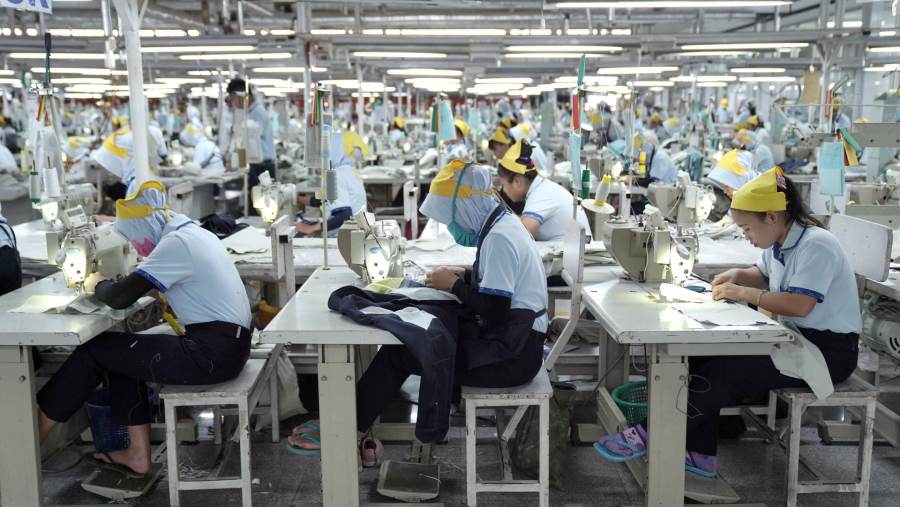
He revealed that domestic textile factory utilization is currently only around 50 percent. The weak absorption of domestic production, he said, is triggered by the rapid import of ready-to-wear clothing, which is stifling the competitiveness of the upstream and downstream industries. Without effective import control measures, there is concern that additional imported cotton will not be fully absorbed because production capacity is not fully utilized.
In addition to import controls, Redma encouraged the government to provide incentives that directly reduce production costs in the textile industry. He argued that these incentives must go hand in hand with import restriction policies to achieve a significant impact.
He cited Indian government policies such as the Technology Upgradation Fund Scheme (TUFS), a textile machinery refurbishment program that encourages industrial modernization. Furthermore, India has implemented mandatory standards through the Bureau of Indian Standards (BIS) for imported products, and utilized trade remedies as a means of controlling imports.
Apsyfi also highlighted the clause on imports of shredded worn clothing from the US within the Agreement on Reciprocal Tariffs (ART) trade agreement. The agreement was signed by the Indonesian government and the United States Trade Representative (USTR) in Washington in February 2025.
Redma emphasized the importance of strictly monitoring imports of worn clothing, stating that they must only be imported as shredded clothing for recycling purposes, not as used clothing that could potentially seep into the domestic market. He emphasized the importance of clear definitions and oversight of importers, processing methods, and distribution.
Indonesia itself prohibits the import of used clothing. Therefore, Apsyfi urged the government to ensure that the policies in the Bylaws do not create opportunities for used clothing to enter the domestic market. Without strict oversight, this import policy is feared to further pressure the national textile industry, which is already facing significant challenges.