
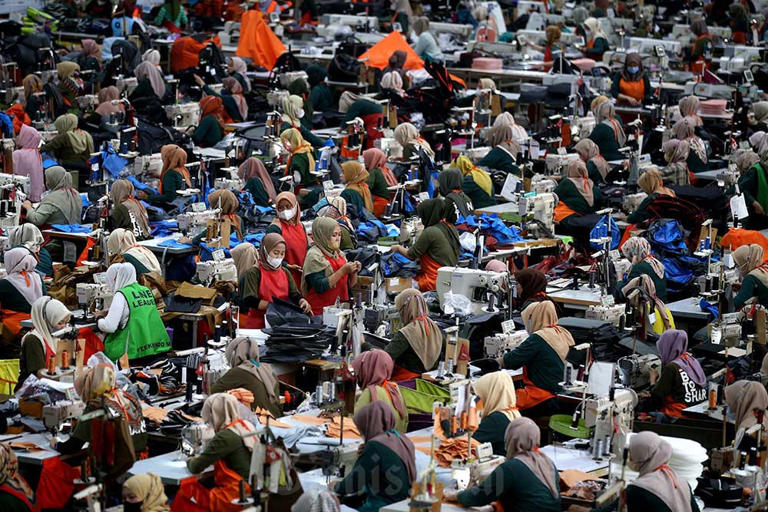
The meeting between President Prabowo Subianto and United States President Donald Trump is a crucial moment for the national textile and textile product (TPT) industry. Businesses hope that this high-level diplomacy will result in tariff relief for exports to the United States market, which has long been a primary destination for Indonesian textile products.
Currently, the reciprocal tariff for Indonesian textile products is at 19%, down from the previous 32%. However, for the industry, this figure is still considered burdensome and reduces competitiveness compared to other countries that enjoy more competitive tariff treatment. The Indonesian Fiber and Filament Yarn Producers Association (APSyFI) believes that further tariff reductions are crucial to recovering export performance that has been depressed in recent years.
Redma Gita Wirawasta, Chairperson of the Indonesian Fiber and Filament Yarn Producers Association, stated that the United States market remains a mainstay for national textile exports. However, the burden of tariffs makes it difficult for Indonesian products to compete, especially amidst intense global competition. However, he cautioned that tariff reductions alone are insufficient without fundamental domestic improvements.
During the negotiations, the United States reportedly requested that Indonesia increase its purchases of cotton from the United States as a condition for the tariff reduction. This request presents a significant challenge because the national spinning industry has not yet fully recovered. The current utilization rate of spinning mills remains below 50%, resulting in a decrease in raw material demand.
APsyFI data shows that before the Covid-19 pandemic, Indonesia's total cotton imports reached around 600,000 tons per year, with approximately 300,000 tons coming from the United States. However, since 2022, this trend has declined sharply. By 2025, total cotton imports will be only around 300,000 tons, with the portion from the United States remaining at around 70,000 tons. This decline reflects the sluggish production activity in the spinning sector in recent years.
The low industrial utilization rate is inseparable from the pressure of imported products, suspected of being imported through dumping practices, both in the form of fabric and yarn. This situation is eroding the domestic market and suppressing demand for domestic products. As long as the domestic market has not recovered and competition remains unequal, the industry finds it difficult to increase production, let alone meet the additional demand for cotton imports from the United States.
Therefore, APSyFI hopes that the government's trade diplomacy will not only focus on tariff reductions but also be accompanied by domestic structural improvements. Adequate market protection, strict import oversight, and the creation of a fair business climate are considered prerequisites for the industry to be able to increase production capacity again.
The Prabowo-Trump meeting will be a test of Indonesia's trade strategy. If negotiations succeed in lowering tariffs and are accompanied by domestic policy reforms, the textile industry has the opportunity to strengthen its position in the United States market. However, without comprehensive improvements, tariff relief alone will not be enough to boost the competitiveness of national textiles.