
Rp101 Trillion State-Owned Textile Enterprise Deemed Insufficient Without Competitive Climate Reform
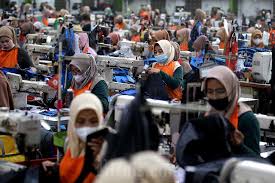
The government's plan to establish a new state-owned enterprise (SOE) in the textile sector with an investment of Rp101 trillion has drawn attention from the Indonesian Fiber and Filament Yarn Producers Association (APSyFI). The association believes this policy needs to be accompanied by comprehensive improvements to the textile industry climate to truly achieve the goal of saving the sector.
APSyFI Chairman Redma Gita Wirawasta stated that the establishment of a textile SOE could be one option to maintain the sustainability of the national textile industry, which continues to face pressure. However, this step will not be effective without fundamental improvements to the business climate. He believes that improving trade policies and enforcing fair business competition are key to the industry's survival and growth.
Redma believes that the discourse on establishing a textile SOE reflects the government's concern for the condition of the textile industry. However, he emphasized that policy implementation is far more important than mere planning. The government, he said, must ensure domestic market protection so that domestic products are not further eroded by dumped and illegal imports.
He also recalled past experiences where the government had disbursed substantial funds to support the textile industry, but the results were insignificant. Between 2007 and 2016, interest subsidies for machinery restructuring reached approximately IDR 3.5 trillion. However, without improving the competitive climate, the national textile industry continued to struggle to cope with the onslaught of imports, and export performance stagnated at around US$12 billion to US$13 billion.
According to Redma, this fact demonstrates that large capital injections or investments do not automatically strengthen the industry if fundamental issues are not addressed. Without a fair and protected domestic market, various incentive policies risk having no real impact on increasing industrial competitiveness.
Amidst these conditions, the plan to establish a state-owned textile enterprise (SOE) also holds significant public interest, given that this sector employs a large workforce and contributes significantly to the national economy. APSyFI hopes that the government's policies will not only focus on establishing new entities but also create a healthy industrial ecosystem, protect jobs, and strengthen the position of national textile products in both domestic and global markets.