
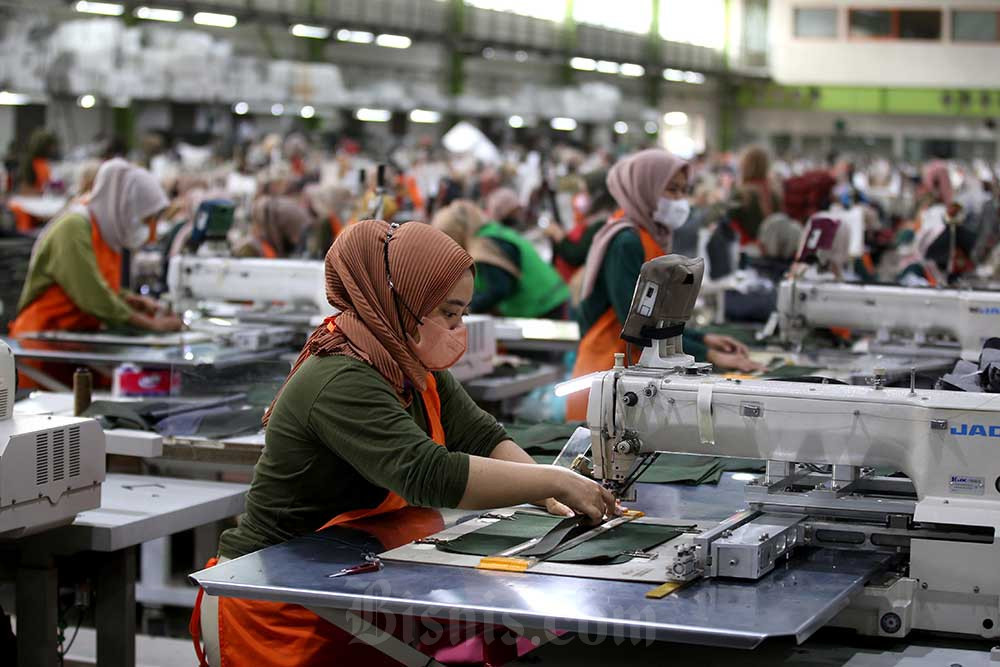
Textile industry players believe the investment stimulus policies currently implemented by the government have not addressed the fundamental challenges facing the textile and textile product (TPT) sector. The Indonesian Filament Fiber and Yarn Producers Association (APSyFI) has urged the government not to repeat the old pattern of providing fiscal incentives, which focuses solely on encouraging new investment.
APSyFI Chairman Redma Gita Wirawasta stated that investment-based incentive approaches, such as tax holidays and tax allowances, are considered ineffective in strengthening the national textile industry. According to him, the industry's main problem currently lies not with investment interest, but with business sustainability amidst pressures on production costs and intense market competition.
Redma believes that these investment incentive schemes have long been available. However, in practice, utilization of these facilities has been relatively minimal. In fact, in previous periods, the government revised regulations related to tax holidays and tax allowances several times due to low interest from industry players. This situation indicates that fiscal incentives aimed at investment do not necessarily align with the current real needs of the textile and textile industry.
He added that without market security and strong integration between the upstream and downstream sectors, investment incentives will not have a significant impact on increasing the competitiveness and exports of national textiles. The weak connection between raw material suppliers and final product manufacturers is considered an unresolved structural obstacle.
APsyFI encourages fiscal incentives to be more focused on reducing production costs, particularly in the upstream and inter-process sectors. Several cost components, such as energy, logistics, interest expenses, and taxes, are said to significantly impact the cost structure of the national textile industry. If these costs are not reduced, domestic products will continue to be less competitive, both in the domestic and global markets.
In addition to cost efficiency, Redma also emphasized the importance of domestic market security policies. The influx of low-priced imported products is considered to be further stifling the local industry. Therefore, a combination of cost efficiency policies and domestic market protection is considered key to ensuring fiscal incentives truly impact the sustainability of the textile and textile industry.
Previously, Finance Minister Purbaya Yudhi Sadewa stated that the government will ensure that fiscal incentives, both for investment and the business sector, are well-targeted. This is in line with the planned restructuring of the criteria for businesses receiving tax holidays and tax allowances.
The restructuring will be regulated in a draft Presidential Regulation on Investment Business Sectors initiated by the Coordinating Ministry for Economic Affairs and targeted for enactment in 2026. However, Purbaya admitted that he was still awaiting further discussions from the Coordinating Ministry for Economic Affairs and emphasized that the evaluation of fiscal incentives would be carried out on a case-by-case basis.