
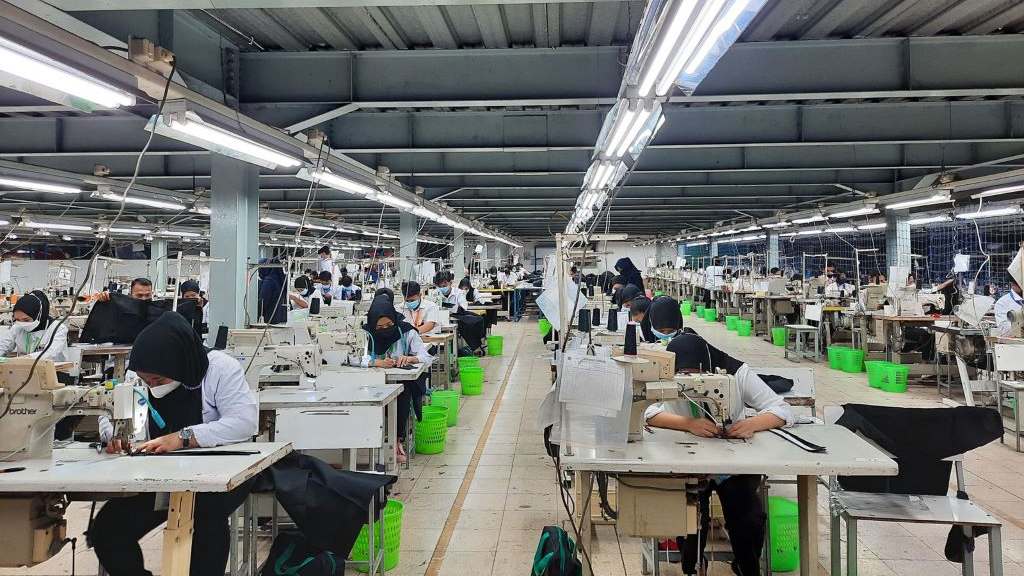
The Indonesian Filament Yarn and Fiber Producers Association (APSyFI) has called on the government to maintain trade protection measures to safeguard the competitiveness of the domestic textile industry by continuing the imposition of Anti-Dumping Duties (BMAD) on synthetic filament yarn imports from China.
“This concerns the fate of thousands of factories and millions of workers,” said APSyFI Chairman Redma Gita Wirawasta in a statement from Jakarta on Thursday.
Redma's appeal was made in response to the government’s plan not to proceed with the recommended BMAD on synthetic filament yarns originating from China. He stressed the importance of a trade policy that supports the sustainability of the national fiber and filament yarn industry and strengthens a healthy and sustainable industrial ecosystem.
He emphasized that the recommendations from the Indonesian Anti-Dumping Committee (KADI) must be followed up to ensure the continuity of thousands of textile factories that support millions of jobs across Indonesia.
According to Redma, equal protection for the domestic industry should not be viewed as excessive protectionism, but rather as a strategic step to create a level playing field for local players in the domestic market. He warned that imported goods priced below fair value and subsidized by the country of origin could severely disrupt the market structure and destabilize the textile industry ecosystem from upstream to downstream.
Referring to Article 70 of Law Number 7 of 2014 on Trade, Redma stated that the government is obliged to take anti-dumping measures when imported products are sold below fair market value and cause harm to domestic industries, including through BMAD.
APSyFI believes that supporting the national industry is part of a broader strategy to build economic self-reliance and fulfill the government’s vision of industrial downstreaming.
Redma also highlighted the multiplier effect of the textile industry—from employment absorption and increased electricity consumption to reducing the nation’s social and fiscal burden.
The association urged all stakeholders to strike a balance between offering fair prices to consumers and sustaining the local industry, which plays a vital role in the national economy.
On the other hand, the government has decided not to proceed with KADI's recommendation to impose BMAD on certain synthetic filament yarns from China.
Trade Minister Budi stated that the decision was made after careful consideration of the overall condition of the national textile and textile product (TPT) industry and input from relevant stakeholders.
"This decision took into account the condition of the national TPT industry, especially the fact that the supply of certain synthetic filament yarns in the domestic market remains limited," Budi said in an official statement from Jakarta on Thursday.
He explained that domestic production capacity is currently insufficient to meet the needs of downstream industries, with most filament yarn producers using their output internally.
Another consideration is that the upstream TPT sector is already subject to trade remedies, such as the Safeguard Import Duty (BMTP) under Ministry of Finance Regulation No. 46 of 2023.
Moreover, BMAD has already been applied to polyester staple fiber products from India, China, and Taiwan through Regulation No. 176 of 2022. Budi cautioned that if BMAD on certain synthetic filament yarns were also imposed, it could increase production costs and erode the competitiveness of downstream sectors.