
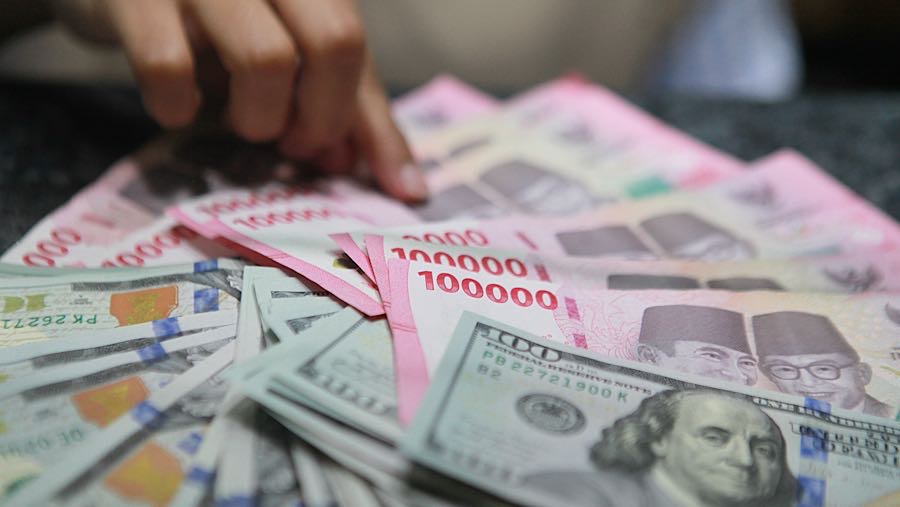
The weakening rupiah against the US dollar is further intensifying pressure on the national industry. This situation has forced many businesses into survival mode amid rising production costs and weakening purchasing power.
Bob Azam, Head of the Employment Division of the Indonesian Employers' Association, stated that the business world is currently facing a very difficult situation due to a combination of various economic pressures coming together.
According to him, the weakening rupiah, rising energy prices, high interest rates, and cash flow problems due to delayed restitution have created a situation known as a "perfect storm" for the national industry. Furthermore, the consolidation of global company operations also has the potential to trigger a reduction in business activity in several countries, including Indonesia.
Bob explained that companies are currently striving to reduce operational costs and maximize efficiency to remain viable. However, the industry's room for maneuver is increasingly limited because rising production costs cannot be fully passed on to consumers.
Weakening purchasing power makes it difficult for companies to raise product prices. If prices are forced to rise, sales are feared to decline, worsening business conditions.
"More radical efficiency and productivity are inevitable in order to survive and absorb all cost increases as much as possible," said Bob, Thursday (May 28, 2026).
The national textile and fiber industry is also experiencing similar pressures. The Secretary General of the Indonesian Filament Fiber and Yarn Producers Association, Farhan Aqil, said the weakening rupiah has had a direct impact on the rising prices of imported raw materials and production costs in the textile industry.
He mentioned that one of the main raw materials experiencing increases is Mono Ethylene Glycol (MEG), which is still imported from Saudi Arabia. On the other hand, the surge in global oil prices has also caused a sharp increase in polyester prices because this raw material is based on petrochemicals.
Farhan explained that raw material prices had previously soared by almost 40 percent due to the increase in global oil prices. When combined with the weakening rupiah against the US dollar, the total increase in production costs is estimated to reach around 50 percent.
According to him, the strong flow of textile product imports has also further worsened the condition of the domestic industry. He believes the national textile industry's supply chain has been severely disrupted due to long-term deindustrialization.
Farhan believes the current rupiah depreciation is a further impact of overly lenient policies toward imported products that enter the domestic market directly without undergoing domestic processing.
Therefore, industry players are urging the government to take immediate steps to maintain the stability of the rupiah exchange rate. Exchange rate stability is considered crucial because, although sales transactions are conducted in rupiah, many payments for industrial raw materials still use US dollars.
In overseas markets, pressure on the rupiah is increasingly apparent. According to Bloomberg data, the rupiah touched Rp17,892 per US dollar in offshore trading last night before closing at Rp17,886 per US dollar.
Meanwhile, in Non-Deliverable Forward (NDF) trading on Thursday morning (May 28, 2026), the rupiah strengthened slightly to Rp17,846 per US dollar after previously remaining stagnant.
In the last domestic trade before the Eid al-Adha holiday, Tuesday (May 26, 2026), the rupiah closed at Rp17,789 per US dollar, its lowest level in history. Throughout the day's trading, the rupiah hit several new record lows before finally closing near Rp17,800 per US dollar.