
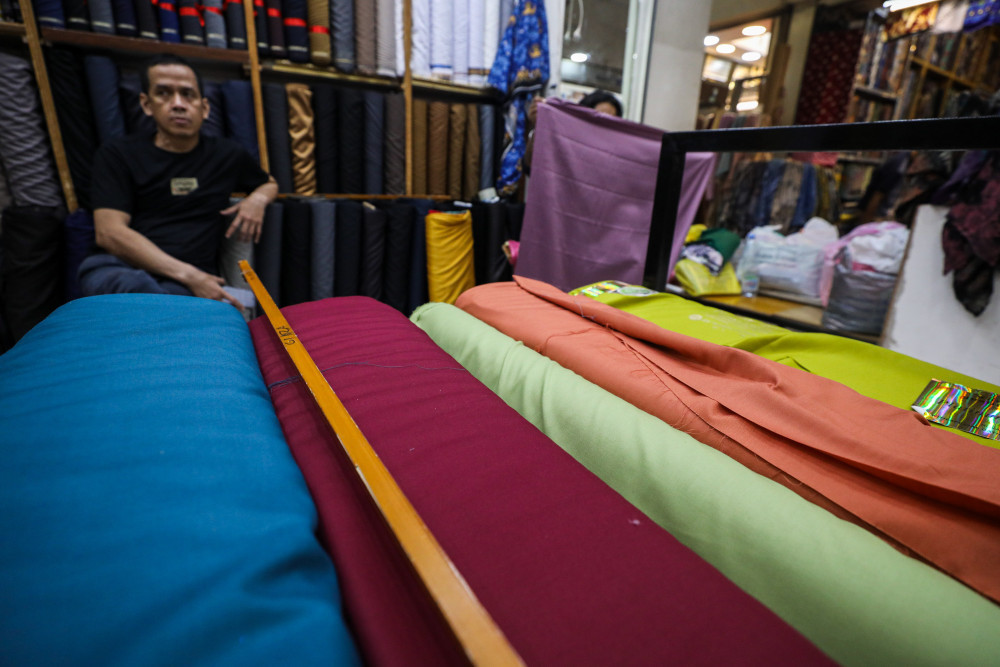
The escalating conflict in the Middle East has had a ripple effect on various global industrial sectors, including the textile industry in Indonesia. The resulting geopolitical uncertainty has impacted the stability of raw material supplies and driven up production costs. In this situation, textile businesses have begun shifting their strategies, focusing on the domestic market as a survival measure.
This shift in market orientation is not without reason. Reliance on international markets is now considered riskier amid unpredictable global fluctuations. The Secretary General of the Indonesian Filament Fiber and Yarn Producers Association (APSyFI), Farhan Aqil Syauqi, explained that industry players are not only shifting markets but also adjusting their production lines to introduce higher-value-added products. This step was taken to maintain business continuity in the short and medium term.
The strategy of shifting focus to the domestic market is not new. A similar approach was implemented during the Covid-19 pandemic, when global trade activity experienced a significant slowdown. Now, under similar circumstances, the domestic market is again seen as the mainstay of the national textile industry.
Amid these challenges, opportunities remain through raw material innovation. Aryo Oetomo, Head of PT Asia Pacific Rayon, highlighted the potential of viscose fiber as a strategic alternative to increase industrial competitiveness. Indonesia is considered to have a wealth of wood-based natural resources that can be processed into textile raw materials, such as rayon or viscose, which have not been fully utilized.
Utilizing these local resources is part of efforts to strengthen industrial independence. Furthermore, strengthening the domestic petrochemical sector is also considered crucial to ensuring the sustainability of key raw material supplies. Support for energy infrastructure, including the availability of gas networks for industry, is also a determining factor in creating production efficiency.
If the industrial ecosystem can be integrated from upstream to downstream, dependence on imports is expected to decrease. This is key to strengthening the resilience of the national textile industry amidst growing global pressures.
However, the challenges have not completely subsided. The recent increase in raw material prices has put significant pressure on production costs. The Chairperson of the Indonesian Yarn and Filament Producers Association, Redma Gita Wirawasta, revealed that several key components, such as paraxylene (PX), purified terephthalic acid (PTA), and monoethylene glycol (MEG), have experienced price increases of around 40 percent. Consequently, the prices of polyester-based products have also increased by the same percentage.
In contrast to polyester, rayon-based materials are relatively more stable because they are only influenced by one main component. This makes rayon a more competitive alternative amidst global raw material price volatility.
In addition to pressure from the raw material side, the logistics sector also presents its own challenges. Rising shipping costs, particularly insurance, are placing a further burden on industry players. This situation limits companies' ability to maintain overall cost efficiency.
However, in terms of supply, conditions remain relatively secure in the short term. APSyFI stated that raw material availability is projected to remain stable until April 2026, supported by supplies from Pertamina, particularly for paraxylene, a key component in polyester production.
Given the various dynamics that are occurring, the Indonesian textile industry is now being challenged to be more adaptive and innovative. Shifting focus to the domestic market, utilizing local resources, and strengthening the industrial ecosystem are strategic steps to maintain resilience amidst global pressures that show no signs of abating.